
Cat Domestication vs Dogs
How Different Evolutionary Paths Created Today's Pets

Picture yourself in the ancient Fertile Crescent, watching as a cautious wildcat edges closer to human settlements, drawn by the abundance of rodents in grain stores. Meanwhile, thousands of years earlier, somewhere in Eurasia, a wolf approaches a human campfire, initiating what would become one of the most profound partnerships in natural history. These two moments – each representing a different path to domestication – would shape not just these species, but our entire understanding of how animals form bonds with humans.
Two Paths to Partnership: Nature's Grand Experiment
The divergent evolutionary journeys of cats and dogs offer fascinating insights into how different selection pressures create distinct patterns of behavior and social bonding. When you see your cat surveying their domain from a carefully selected high perch while your dog seeks direct physical contact, you're witnessing the outcome of two remarkably different evolutionary strategies – both equally successful in their own way.

Cats: Masters of Self-Domestication
The domestication of cats presents us with what might be nature's most successful example of self-directed evolution. Archaeological and genetic evidence reveals that around 9,000 years ago, African wildcats (Felis silvestris lybica) discovered an opportunity that would forever change their species (Driscoll et al., 2009).
Unlike dogs, who underwent intensive selective breeding by humans, cats essentially domesticated themselves.
As early agriculturalists created grain stores, they unknowingly established what scientists call a commensal relationship – where one species benefits while the other remains largely unaffected. These storage areas attracted rodents, creating an unprecedented hunting ground for wildcats adaptable enough to tolerate human presence. This subtle dance of mutual benefit would shape feline evolution in fascinating ways.
Genetic research by Montague et al. (2014) reveals the remarkable efficiency of their adaptation. Unlike most domesticated animals, cats retained most of their ancestral traits, developing only the minimal changes necessary for living near humans:
Their memory systems adapted to recognize human-associated hunting opportunities, but maintained the sharp predatory instincts of their wild ancestors.
Their stress responses adjusted just enough to tolerate closer proximity to humans without losing their independent nature.
Perhaps most intriguingly, they developed sophisticated social signals specifically for interacting with humans – a remarkable example of targeted evolutionary adaptation.
The Modern Cat's World: Territory, Trust, and Choice
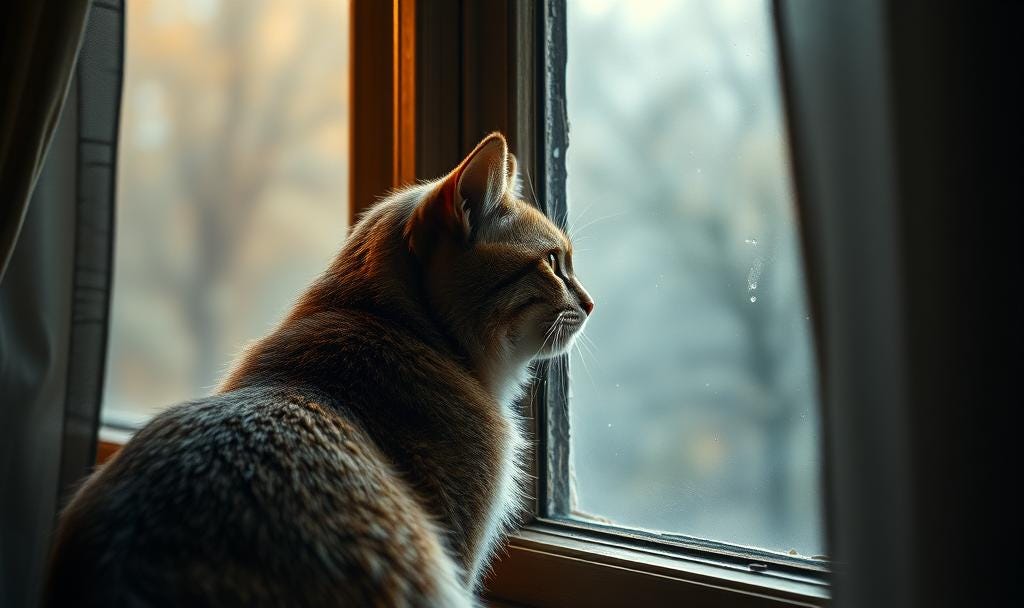
Modern research helps us understand how cats view their environment through an evolutionary lens. Your home isn't just a living space to them – it's a complex territory that needs to be properly organized and maintained, reflecting their ancestral needs as both predator and prey.
Territory Management reflects millions of years of evolutionary programming. When your cat patrols their domain or marks specific locations, they're engaging in behaviors that helped their ancestors survive. This understanding leads to practical insights for creating an environment that supports their natural behaviors:
Create vertical pathways through your home using shelves, cat trees, and perches. This isn't just about enrichment – it's about honoring their evolutionary need for safe observation points and escape routes. In the wild, height meant safety and hunting advantage. In your home, it provides security and confidence.
Establish multiple "resource stations" with water, resting spots, and scratching posts following the n+1 rule (one more resource than the number of cats). This reflects their natural tendency to maintain multiple safe spaces within their territory. In nature, cats wouldn't concentrate all their resources in one vulnerable location.
Provide hiding spots and observation points that let them monitor their domain. This isn't about being antisocial – it's about maintaining the environmental awareness that was crucial for their ancestors' survival.
Dogs: The Great Transformation
The dog's evolutionary journey represents one of the most dramatic transformations in natural history. Through selective breeding beginning 15,000-40,000 years ago, wolves underwent remarkable changes that would create the amazingly diverse species we know today (Larson et al., 2012).
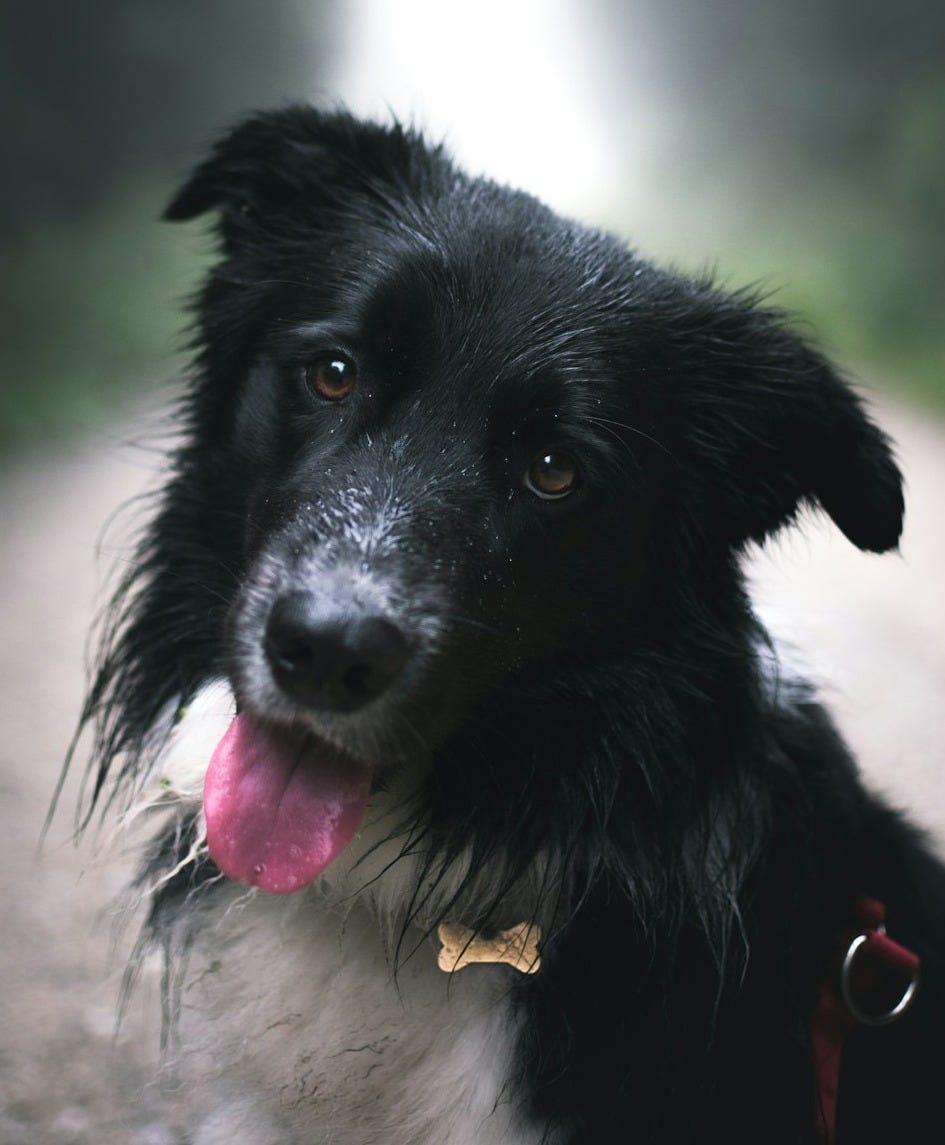
These changes were profound and specifically oriented toward human interaction. Research shows that dogs developed entirely new physical and behavioral traits:
New facial muscles evolved specifically for communication with humans (Kaminski et al., 2019). This wasn't just a random change – it was a direct adaptation for social bonding, allowing dogs to create expressions that wolves physically cannot make. The famous "puppy dog eyes" are a product of muscles that evolved specifically for human interaction.
Their digestive systems transformed to process human foods (Axelsson et al., 2013), gaining additional copies of genes for starch digestion. This adaptation went hand in hand with their increasing social proximity to humans, allowing them to thrive on human-provided food rather than requiring a strict carnivorous diet.
Perhaps most remarkably, they developed enhanced social cognition specifically for human interaction.
Dogs can read human facial expressions, understand pointing gestures, and interpret vocal tones in ways that even our closest primate relatives cannot.
This isn't just learning – it's hard-wired into their evolved cognitive architecture.
Understanding the Social Dog: From Wolf to Human Companion
Dogs see their human family as their social group, a perspective shaped by their evolution from wolf ancestors. This understanding leads to specific recommendations for supporting their social needs:
Consistent daily routines provide predictability, reflecting their evolutionary history as cooperative hunters. In wolf packs, coordinated activities like hunting and territory patrol follow reliable patterns. When we establish consistent schedules, we're working with their evolved social programming.
Clear boundaries combined with social connection mirror the structured yet cooperative nature of pack life. Dogs need to understand their role within the family group, just as their ancestors needed clear social structures within the pack. This isn't about dominance – it's about social clarity and security.
Regular social interaction with other dogs isn't just about exercise – it's about maintaining the social skills that were crucial to their ancestors' survival. However, unlike wolves, dogs have evolved to see humans as their primary social partners.
The Science of Different Bonds: Understanding Attachment Through Evolution
Recent research has transformed our understanding of how both species form attachments to humans. Studies by Vitale et al. (2019) demonstrate that cats form secure attachments to their caregivers, similar to dogs and human infants, but express these bonds in ways that align with their evolutionary history as solitary hunters.
Cat Communication: A Subtle Language
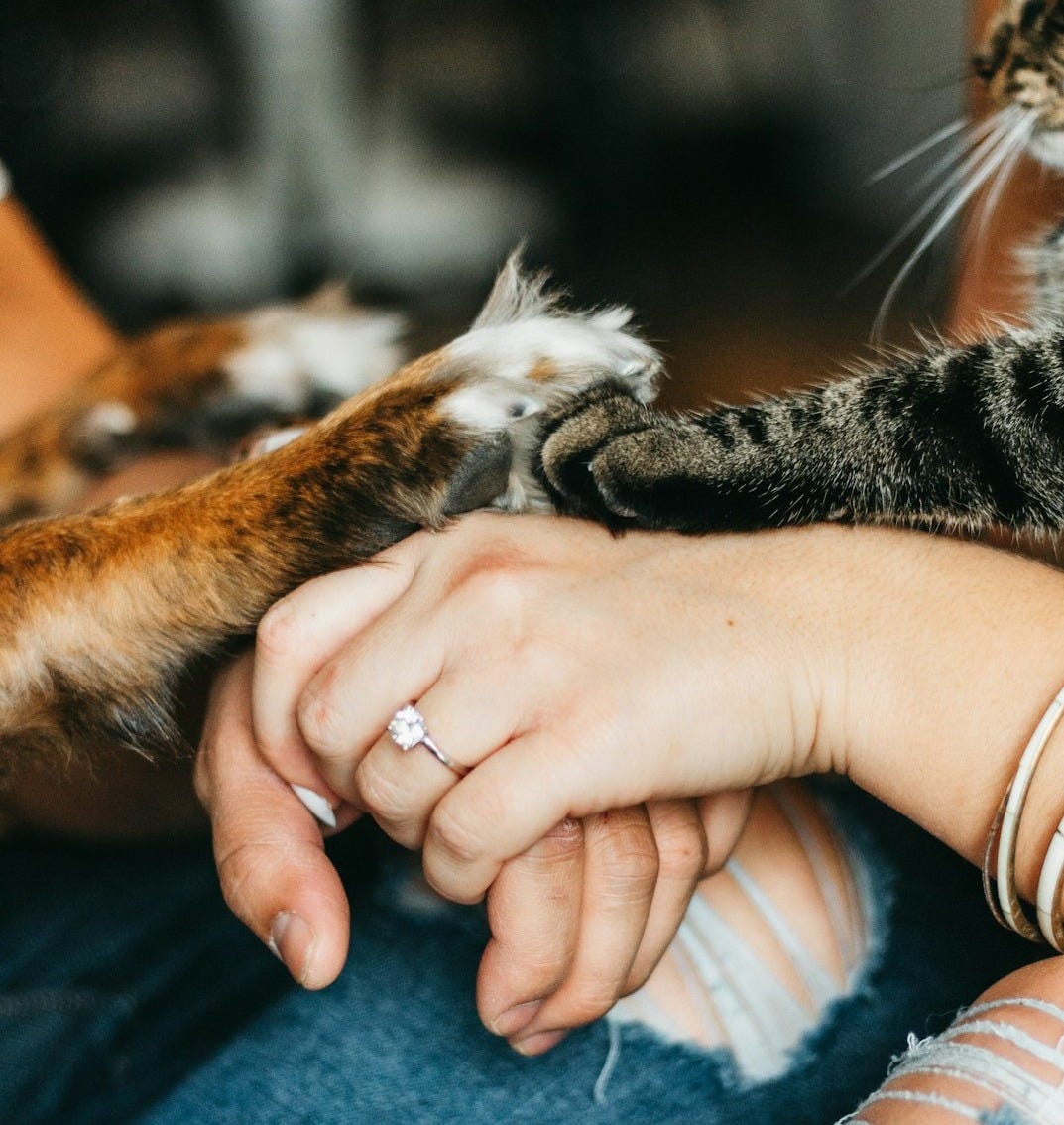
Slow blinks aren't just cute gestures – they're sophisticated social signals that evolved specifically for human interaction. When a cat slow blinks at you, they're using a behavior that required significant evolutionary modification of their natural predator instincts.
Territory sharing represents a remarkable adaptation of their ancestral territorial behavior. When your cat shares prime resting spots or allows you in their personal space, they're demonstrating trust in a way that required significant evolutionary modification.
Choosing to be near you is an active decision that goes against their solitary nature. Unlike dogs, who evolved to seek constant social contact, cats make a conscious choice each time they decide to spend time with their humans.
Dog Communication: The Evolution of Expression
Physical proximity seeking reflects their cooperative social background. Dogs evolved to maintain close contact with their social group, a trait that transferred from wolf packs to human families.
Sustained eye contact serves as a bonding mechanism, releasing oxytocin in both dogs and humans – a physiological adaptation that strengthens social bonds.
Their vocal communications have evolved far beyond their wolf ancestors' repertoire, developing an extensive vocabulary of barks, whines, and grumbles specifically for communicating with humans.
Practical Applications: Working with Evolutionary Nature
Understanding these evolutionary differences helps us create better relationships with our pets:
For Cat Guardians:
Environment Design:
Create multi-level territories that reflect their need for both hunting perches and safety retreats
Establish multiple resource points using the n+1 rule to reduce competition stress
Provide observation posts that allow them to monitor their territory
Maintain consistent territory boundaries to support their sense of security
Social Interaction:
Let them initiate contact, respecting their evolutionary history as solitary hunters
Learn their individual social preferences, which may vary based on early experiences
Recognize subtle signs of affection, understanding that these are significant evolutionary adaptations
For Dog Guardians:
Social Structure:
Maintain consistent daily routines
Use clear communication signals based on their evolved ability to read human cues and support appropriate social bonds through regular interaction
Provide structured activities that satisfy their need for cooperative behavior
Environmental Needs:
Create safe spaces
Provide mental stimulation through training and problem-solving
Establish predictable feeding and exercise schedules
Allow for appropriate social interactions that satisfy their evolved social needs
Beyond Evolution: The Beauty of Individual Variation
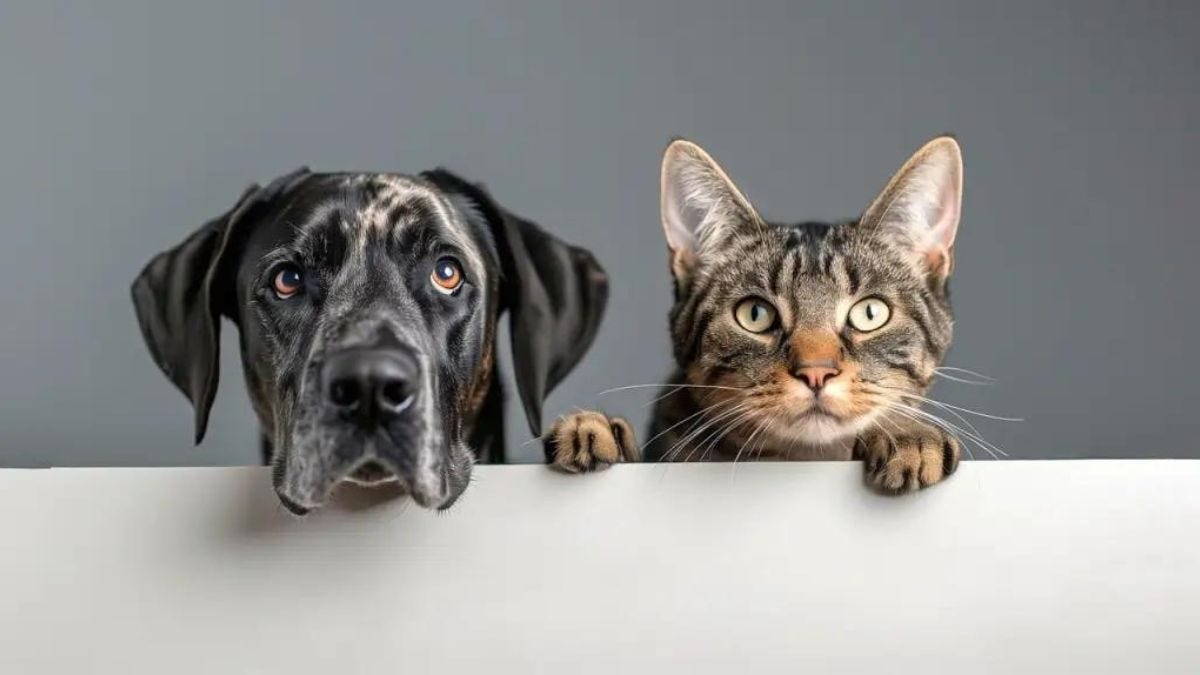
While evolutionary history shapes general patterns of behavior, it's crucial to understand that both cats and dogs show remarkable individual variation in their personalities and behavior patterns. Just as humans maintain their individuality while sharing common traits, our companion animals express unique combinations of their species' evolutionary heritage.
Some cats develop intensely social relationships that might seem more "dog-like," while some dogs show more independent traits typically associated with cats. This variation isn't a departure from their evolutionary heritage – it's part of the natural diversity that allowed both species to adapt so successfully to life with humans.
Recent research in behavioral genetics reveals that this individual variation serves an important evolutionary purpose. Having a range of personality types within a species increases its ability to adapt to different environments and social situations. In modern terms, this means that there's no such thing as a "typical cat" or "typical dog" – each animal is a unique individual expressing their evolutionary heritage in their own way.
For potential pet parents, this means looking beyond species stereotypes to understand the individual animal's personality. While evolutionary history provides a framework for understanding general needs and tendencies, each pet will have their own unique way of expressing their ancestral traits and forming bonds with their human family.
Always consult with veterinary and behavioral professionals for the most current understanding of your pet's needs.
Paws for Reflection 🐾
Has this tail of evolution left you feline more connected to your furry friend? Or maybe it's helping you pick the purr-fect companion? Don't keep this knowledge on a leash – share it with your peeps! After all, the more we understand our four-legged family members, the more harmonious our homes become.
Now that's something worth wagging about!
References
Axelsson, E., et al. (2013). "The genomic signature of dog domestication reveals adaptation to a starch-rich diet." Nature, 495(7441), 360-364. [https://www.nature.com/articles/nature11837]
Driscoll, C.A., et al. (2009). "The Near Eastern origin of cat domestication." Science, 317(5837), 519-523. [https://science.sciencemag.org/content/317/5837/519]
Kaminski, J., et al. (2019). "Evolution of facial muscle anatomy in dogs." PNAS, 116(29), 14677-14681. [https://www.pnas.org/content/116/29/14677]
Larson, G., et al. (2012). "Rethinking dog domestication by integrating genetics, archeology, and biogeography." PNAS, 109(23), 8878-8883. [https://www.pnas.org/content/109/23/8878]
Montague, M.J., et al. (2014). "Comparative analysis of the domestic cat genome reveals genetic signatures underlying feline biology and domestication." PNAS, 111(48), 17230-17235. [https://www.pnas.org/content/111/48/17230]
Vitale, K.R., et al. (2019). "Attachment bonds between domestic cats and humans." Current Biology, 29(18), R864-R865. [https://www.cell.com/current-biology/fulltext/S0960-9822(19)31086-3]
Bradshaw, J.W.S. (2016). "Sociality in cats: A comparative review." Journal of Veterinary Behavior, 11, 113-124. [https://www.sciencedirect.com/science/article/abs/pii/S1558787815001975]
Nagasawa, M., et al. (2015). "Oxytocin-gaze positive loop and the coevolution of human-dog bonds." Science, 348(6232), 333-336. [https://science.sciencemag.org/content/348/6232/333]
Remember: While these citations represent key research in the field, new studies constantly emerge.
Very interesting post. Thank you.